
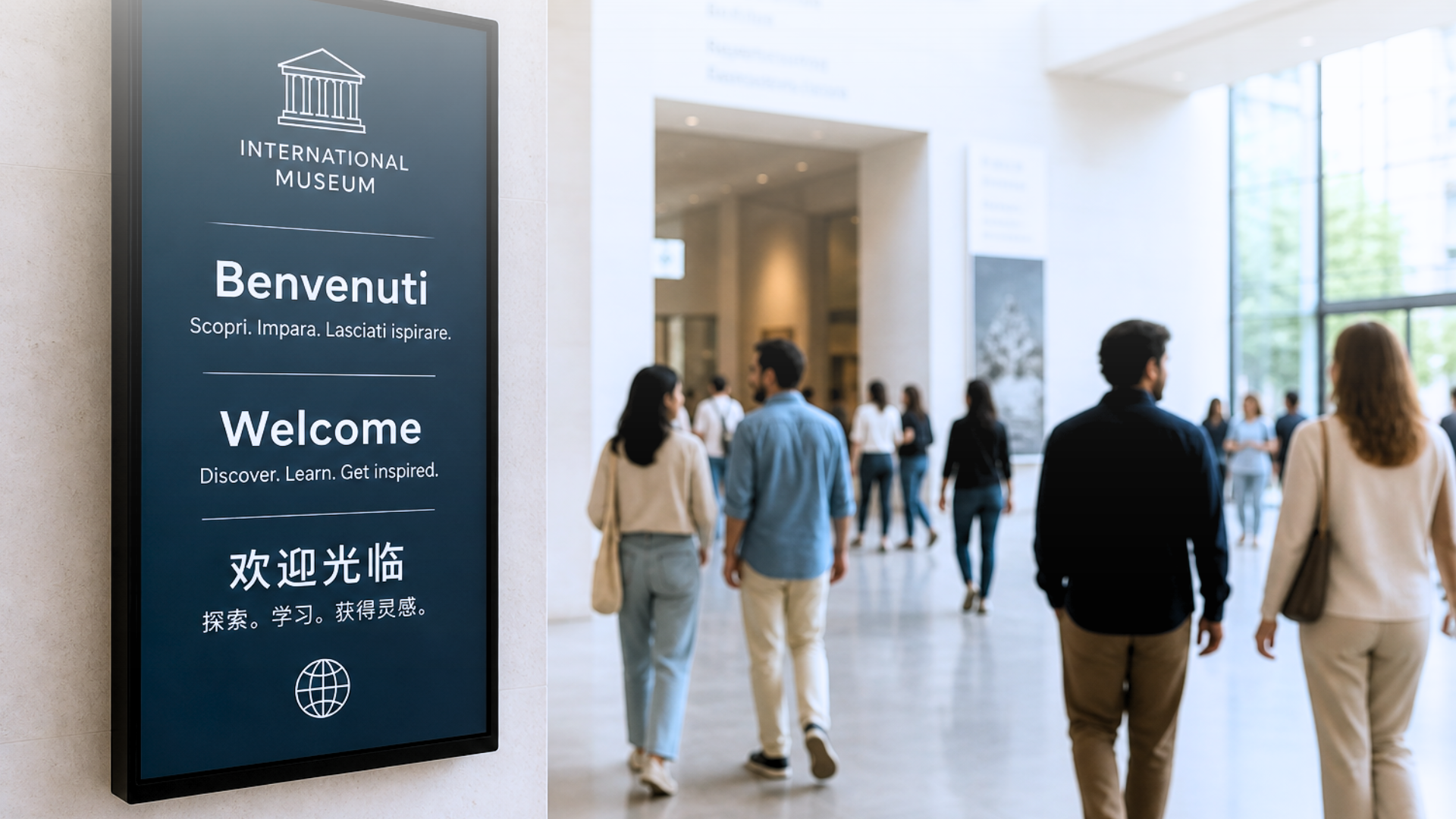
In the globalised landscape of 2026, the concept of “hospitality” extends beyond a warm welcome at a reception desk or a translated brochure. Increasingly, it also involves creating environments that can communicate with international visitors in their preferred language, in real time and with as little friction as possible.
At Livesignage, we view ourselves as more than just software providers. We are strategic partners and observers of how public, retail, and corporate spaces evolve. Through the diverse projects we have developed with international partners, we have realised that multilingual digital signage can be more than a technical add-on. It can become an important part of an inclusive communication strategy, contributing to both social accessibility and commercial value.
Prioritising User Experience: Managing Cognitive Load
A common challenge in international venues is the attempt to address multilingual needs through “visual stacking”. Static signs or digital displays presenting four or five languages simultaneously can become visually crowded and make information more difficult to scan.
Our hands-on experience suggests that a more selective and dynamic presentation can improve clarity. The Livesignage platform allows multilingual content to rotate and transition according to timing configured for the location, audience, and type of information. This can help visitors find relevant information in their preferred language without having to filter it from a crowded block of multilingual text. By making information easier to navigate, this approach can reduce confusion and support a greater sense of comfort, particularly in environments such as transport hubs, hospitals, and large museums.
The Multilingual Totem: From Information Point to Cultural Mediator
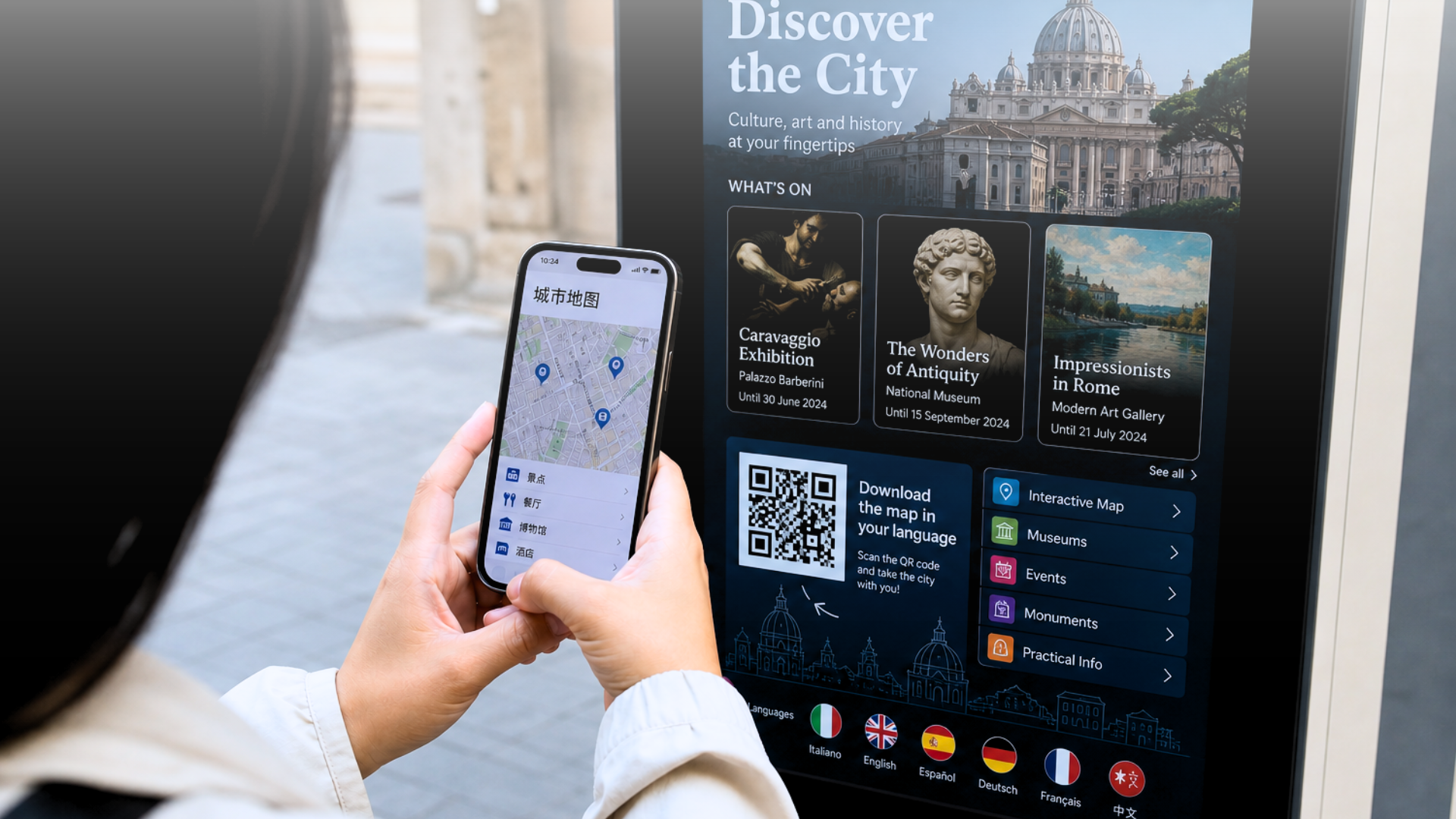
Our vision of the digital totem has evolved through our active participation in urban redevelopment and smart city projects. We no longer view the totem simply as a screen supporting traditional wayfinding; it can become an interactive hub for accessible, multilingual information.
We have seen first-hand how integration between a large-format display and the user’s personal device — an approach we call cross-device synergy — can contribute to a more inclusive experience. A visitor can interact with a map in Japanese or Arabic on a Livesignage totem and then scan a QR code to continue the localised experience on their smartphone. This isn't just a technological gimmick; it is a deliberate design choice to extend the sense of hospitality far beyond the physical borders of the screen.
Inclusivity as a Business Driver: Data-Backed ROI
It is a common misconception that linguistic inclusivity is merely a "nice-to-have" ethical duty. Our field data indicates that linguistic inclusivity can deliver measurable returns. Analysis of our platform performance metrics shows a consistent pattern: when visitors interact with content in their native language, they spend more time engaging with it, while their propensity to interact with the brand increases by over 30%.
By reducing the hesitation caused by language barriers, multilingual communication can help guests explore additional services, premium offers, and cultural content with greater confidence. Livesignage supports this process by helping organisations deliver more relevant information to international visitors across connected touchpoints.
Beyond Translation: The Art of Visual Localisation
Over the years, we have refined a methodology that goes beyond literal machine translation. The real challenge in every project is cultural localisation. Our team considers not only the words themselves but also how layouts, iconography, and tone of voice may need to adapt to different linguistic and cultural audiences.
Through centralised cloud-based management, operators can distribute updates across a global network of displays from a single environment. This can help keep urgent safety alerts and seasonal promotions consistent across multiple locations, while allowing content to be adapted for different languages and cultural contexts. This attention to detail can transform a digital display into a more welcoming bridge between languages and cultures.
Looking Ahead: The Era of Adaptive Signage
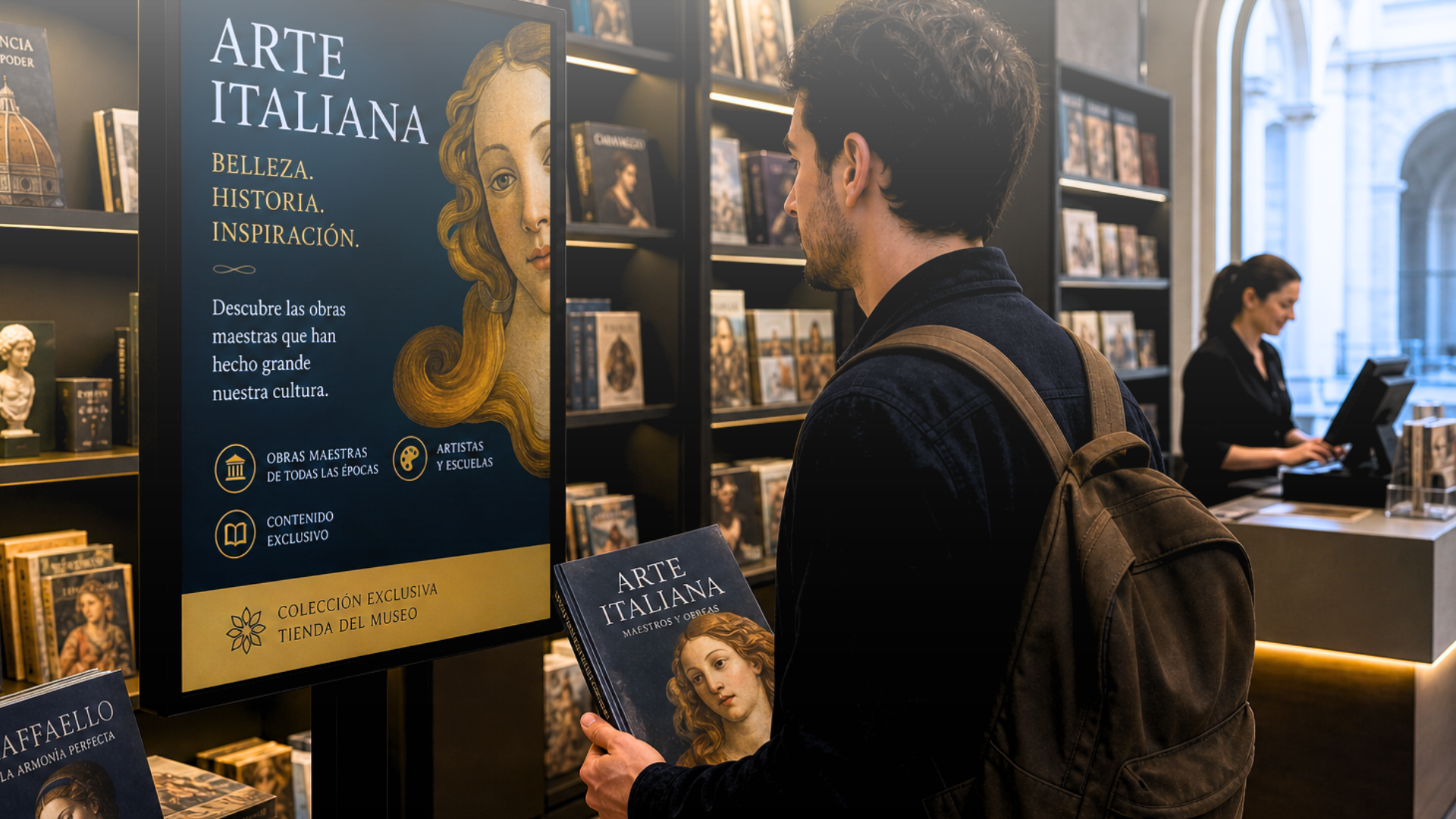
The journey of Livesignage is moving towards a future where content management becomes increasingly autonomous and context-aware. We are exploring systems that use audience-flow patterns, environmental data, and configured contextual information to prioritise relevant languages automatically.
Choosing to collaborate with Livesignage means working with a partner that brings years of research, field testing, and cross-cultural experience to your project. We believe that when a place speaks your language, it ceases to be "somewhere else" and becomes, for a moment, your home.