

Drawing on our work on urban mobility projects, we have observed how stations and airports are evolving from simple transit points into connected information environments. Static signage remains useful for fixed information, but it cannot respond dynamically to delays, platform changes, congestion, or emergencies. Modern passenger information systems therefore need to combine clear communication with reliable operational data. Cloud-native platforms can help transport operators coordinate timely information across displays and support more effective passenger-flow management.
A Practical Approach to Connected Passenger Information Displays
The core of our technological approach lies in transforming passenger information displays into a framework of “collective intelligence”. In our implementations, we have moved beyond static, predefined schedule databases. The systems we deploy function as dynamic aggregators, synthesising data from heterogeneous APIs, transport management systems, and field IoT sensors to reflect changes across the network. Where GTFS Realtime feeds are available, they can provide updates on vehicle positions, expected arrival times, and service disruptions. Livesignage can use supported operational feeds to keep passenger information aligned with changes in the transport network. Predictive analytics can also support crowd management by helping operators identify potential congestion and provide passengers with clearer guidance along platforms and boarding areas.
Adaptive Wayfinding: Supporting Passenger Flow

In large transport infrastructures, digital wayfinding can support passenger flow by presenting clear and relevant directions when conditions change. Livesignage can integrate with supported data sources to update routing information according to the configuration and response times of the overall system. If IoT sensors detect an unusual concentration of people, the system can automatically recalculate routes and suggest alternative paths towards less crowded gates or exits. This form of “human load balancing” is designed to support safer passenger flows, reduce stress, and contribute to a more positive perception of the infrastructure operator. Additionally, we have refined the mobile-to-screen transition, allowing users to scan dynamic QR codes and continue their journey with an augmented reality guide. Where the necessary content is available offline, this approach can help maintain access to information even in areas with limited or no mobile coverage.
Smart City and Resilient Infrastructure: An Integrated Vision
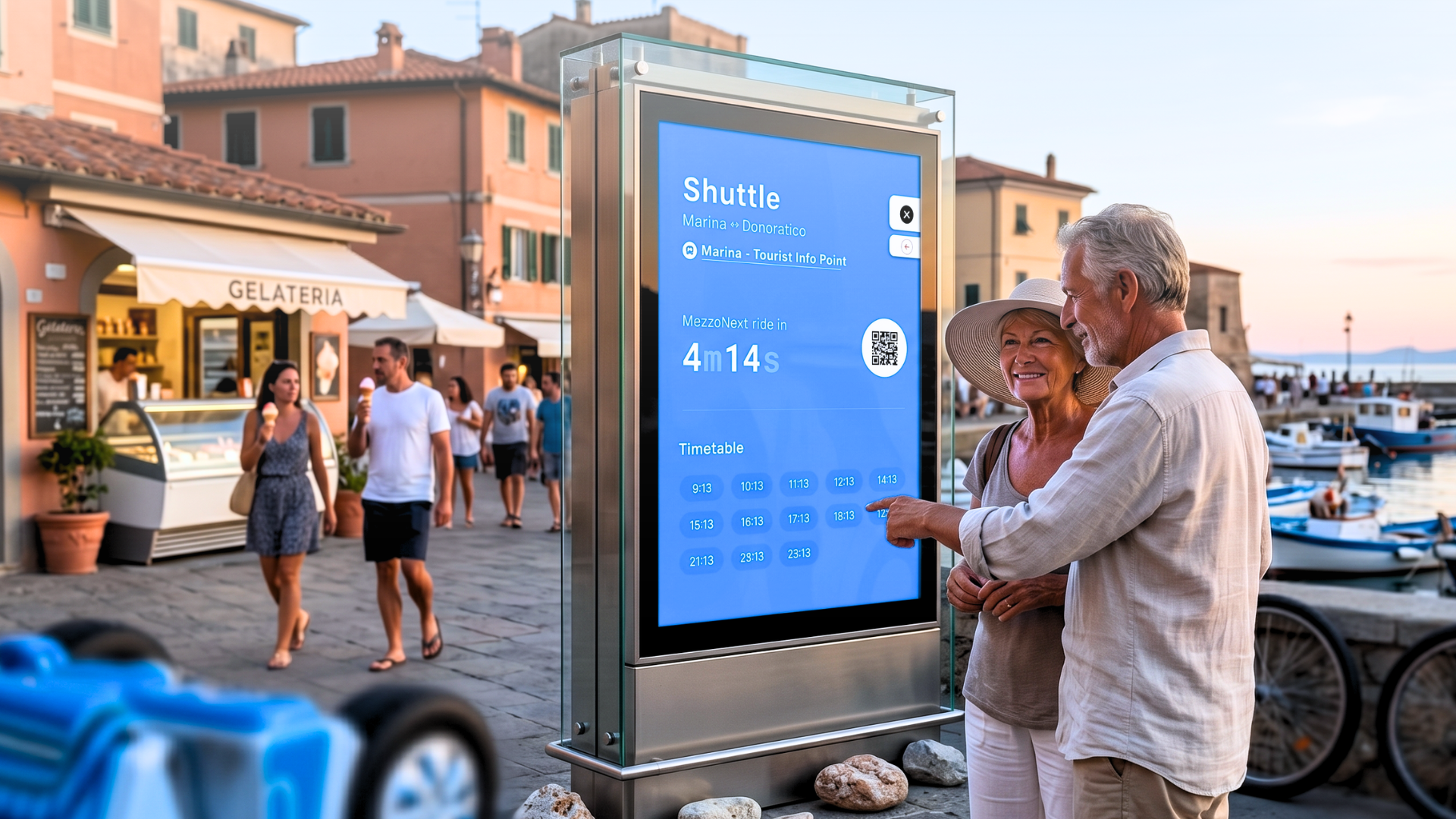
Tourists checking live shuttle times on an outdoor digital information display in a harbour town
Modern digital signage can extend beyond the station’s physical perimeter and become part of a broader smart-city communication network. Centrally managed systems can support both routine passenger information and priority messaging during critical situations, according to the architecture and emergency procedures established for the project. Through the Total Override feature, the entire display network can be switched within seconds to show coordinated evacuation messages or provide vital first-aid instructions across an urban area. Depending on the hardware used, brightness sensors and power-management settings can adjust display operation according to ambient conditions and configured schedules. These measures can help reduce energy consumption while maintaining appropriate information visibility.
The Future of Transit Is Connected: Partner with Experts
Transport hubs are becoming increasingly connected environments in which passenger information, operational data, and digital services work together. Livesignage supports this evolution through cloud-native architectures designed to coordinate data-driven content across displays and connected touchpoints.
By connecting infrastructure management with digital passenger communication, Livesignage can help transport operators address operational challenges and improve the delivery of timely information. Our team can support projects involving passenger-flow communication, smart-city integration, and DOOH content management.
Ready to improve your transport network’s digital communication? Talk to our team about your mobility project.